
This article was originally published by the New Zealand Spinal Trust. View Original PDF Feature.
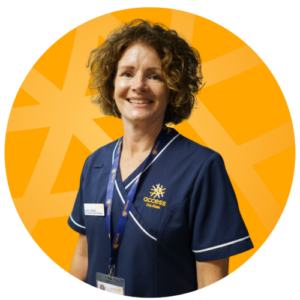
Lynn James is the National Clinical Lead Spinal and Transition Services at Access (Uru Ātea) a New Zealand healthcare provider that delivers in-home care, nursing, and disability support. Prior to her role with Access, she was a Clinical Nurse Specialist in the Burwood Spinal Unit for 18 years. The SNN recently met with Lynn to chat about her role with Access.
Lynn, is originally from Scotland – what brought you to New Zealand, tell us more about your background?
I left Scotland in 1999 to work and travel around Australia and New Zealand as a nurse, working in hospitals across Australia before crossing the ditch. After a few months in hospital settings in New Zealand, I decided to try something completely different and worked in a bar. That decision changed my life, because it was there, I met my now husband. We moved back to Scotland for two years, then made the move to Christchurch in 2003.
Did you train as a nurse in New Zealand?
No, I trained in Perth, Scotland. I worked in a prison in Perth before moving to Edinburgh, where my passion for rehabilitation nursing began while working in a brain injury unit.
What attracted you to working with spinal cord impaired people?
When I moved back to Christchurch, I started working at the Burwood Spinal Unit and quickly rediscovered my love of rehabilitation nursing.
What really stayed with me was the determination of the people I worked with — their drive to regain independence and the way they adapted to such a huge life change. It is different for everyone, but I am inspired by people’s resilience and how they find a way forward. I still feel that, and I learn something new from clients all the time.
What did you enjoy about your role as Clinical Nurse Specialist (CNS)?
As a CNS on the ward, no two days were the same. There were familiar routines — morning cares, ward rounds, education, peer support, and important conversations with patients and whānau — but also constant variety. I enjoyed being part of a busy, connected team alongside medical, nursing, allied health and ward colleagues.
Some of the most meaningful parts of the job were actually the small moments — helping someone feel
comfortable, making sure they could speak to a loved one, or just being there when they needed support. Those things really matter.
What was the appeal to join Access Community Health?
Over the years, I got to know many community providers and became curious about what happened after discharge. I worked with patients from the early days after injury, through rehabilitation and discharge planning, but was not part of their journey once they returned home.
What really stood out about Access was their Transition Service. The idea that you could support someone all the way from hospital into their home — even travelling with them and helping set things up — just made sense. It showed a real commitment to getting it right for people from the start.
“Over the years, I got to know many community providers and became curious about what
happened after discharge.”
Since joining, I have also seen how Access supports people not just coming home from hospital, but also when people change providers. Being able to ensure continuity of care, while respecting each person’s preferences and routines, is incredibly important, and something Access does really well.
After 18 years at Burwood, it felt like the right time to take that step into the community and see the bigger picture.
Have there been any challenges from working with patients to working with support workers?
My eyes were opened to community life very quickly. Looking back, I was probably naïve about what community support really looked like for clients and whānau.
The biggest adjustment has been understanding how different support is at home. On the ward, there is always a team nearby, equipment is close, and routines are structured. In the community, support workers work more independently, they are in someone’s personal space, supporting clinical needs as well as everyday life, relationships and routines. It has given me a greater appreciation of the skill, judgement and responsibility support workers carry, and how important it is that nursing teams help them feel trained, confident and valued.
How has your SCI nursing expertise helped with the advice and support you provide support workers?
My clinical background helps me translate hospital-based knowledge into practical advice support workers can use safely and confidently at home.
Emphasising the importance of attention to detail with key aspects of good skin care, bladder and bowel health, positioning, routines and knowing when something is not quite right.
At Access, we have developed a support worker training programme that focuses specifically on supporting people with a spinal cord impairment, combining online learning, classroom teaching and hands-on skills, which has had really positive feedback.
It is about making sure people leaving the spinal unit have a team who understand their needs, respect their routines, and can support them safely and confidently at home. That level of specialist care and consistency is something Access really delivers on.
What advice would you give to others who support people with spinal cord impairment?
Take the time to really get to know the person and their whānau. This is not just one person’s journey — it affects everyone around them.
Everyone’s experience is different, so it is important not to make assumptions. And listen — they know their body best.
Good support is not about taking over. It is about working alongside someone, helping them maintain their independence, dignity and confidence in their own home.
What have been some of your biggest learnings with Access?
I have learnt how vulnerable and isolated people can be in the community, and how important it is to see the whole person, not just their care needs. Home should be where people feel safest and most in control, but it can be where they feel most exposed without the right supports. It reinforces the importance of reliable, well-trained support workers, good communication, and building trust with clients and whānau.
Any standout moments?
Seeing clients at home, sitting at their dinner table with their people, absolutely fills my cup. Those moments remind me why this work matters. Watching confidence grow over time is also special to see, whether that is getting out to social events, reconnecting with friends, or returning to work or study.
It is a real privilege to be part of that journey and to see people regaining independence and a sense of possibility again.
If you wish to find out more about how Access can support you at home, you can contact Lynn on lynn_james@access.org.nz or through their website www.access.org.nz